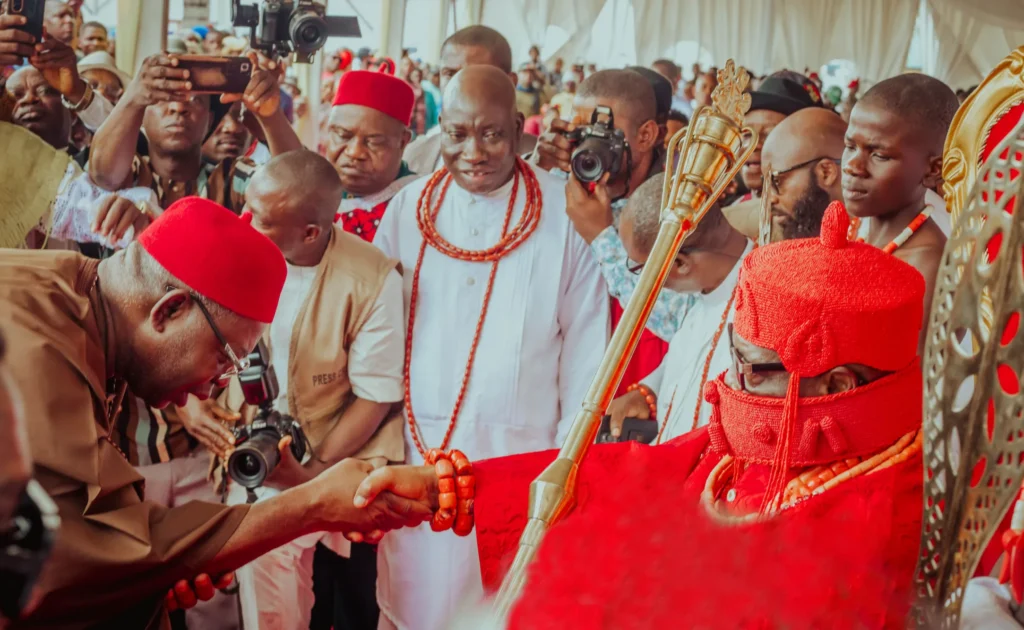
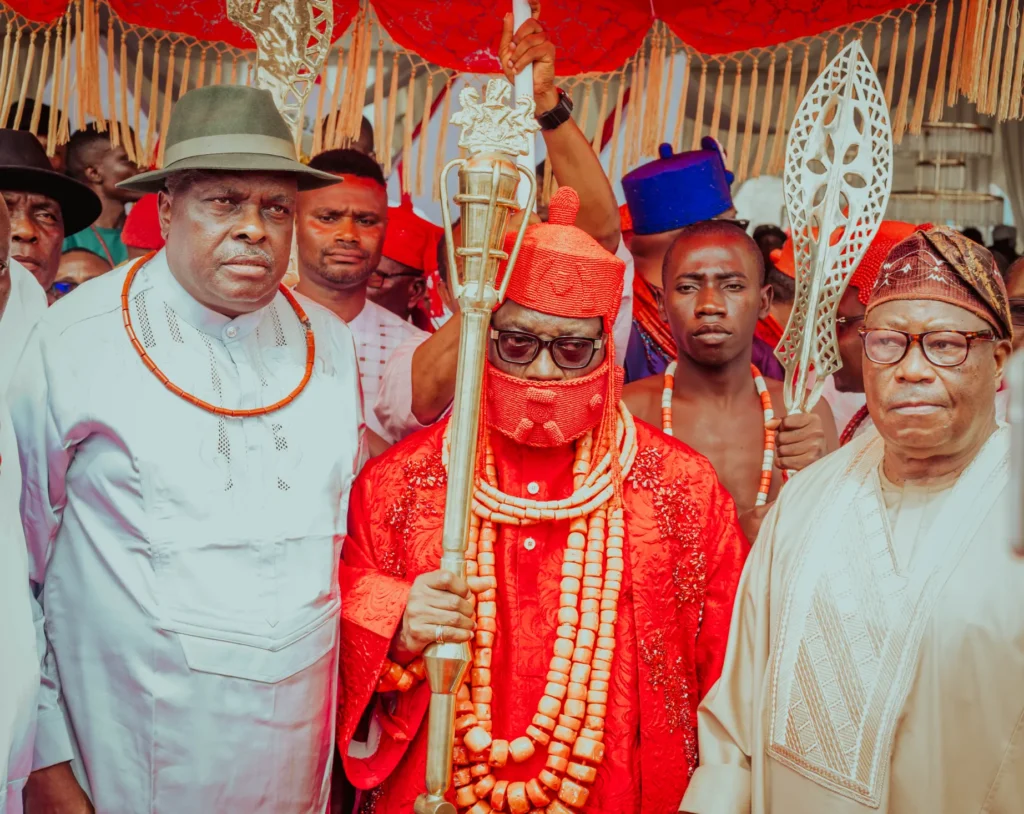
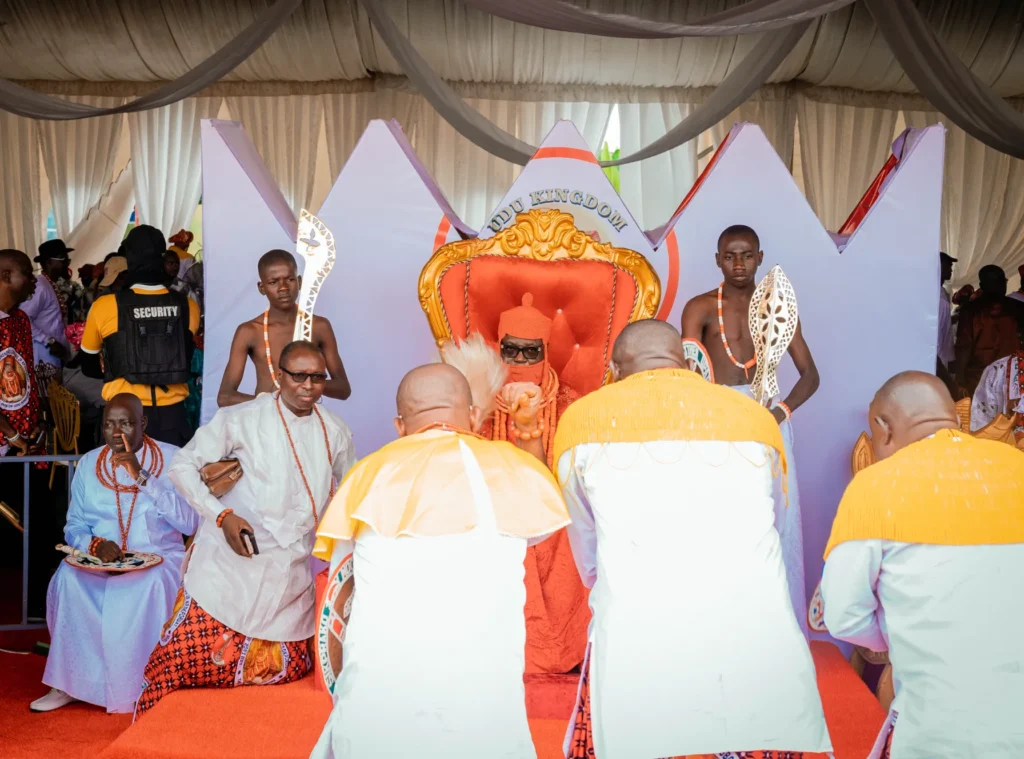
Udu Kingdom reached a defining moment on 7 November 2025, when His Royal Majesty, Engr. Michael Ogheneovo Orugbo, JP, KP, Okporua I, Ovie of Udu Kingdom, formally received his Staff of Office. The presentation was made by the Deputy Governor of Delta State, H.E. Sir Monday Onyeme, before a gathering of traditional rulers, political leaders and sons and daughters of Udu. With it, the reign of Okporua I stands complete in custom and in law.
A Ceremony Years in the Making for the Kingdom’s Story
In the traditions of the Niger Delta, a throne is more than a title. It carries obligations to ancestors, to the land and to the living. For the people of Udu, the ceremony was the moment when the customary authority of the Ovie received the formal backing of the state.
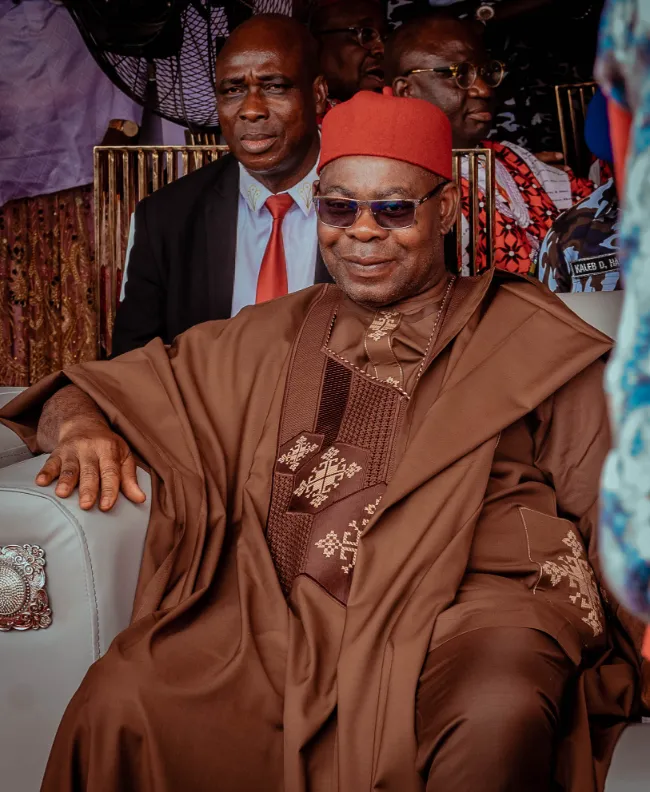
The Staff of Office is the symbol of that recognition. Its presentation by the Deputy Governor, acting for the Delta State Government, confirms that the Ovie’s authority rests on both Udu custom and Nigerian law.
What the Staff of Office Means
Under Delta State chieftaincy law, the Staff of Office is the instrument by which an Ovie is empowered to discharge his functions as the paramount traditional ruler of his kingdom. For Udu, those functions fall into three main areas.
Mediator of customary disputes. The Ovie stands at the head of the traditional system of justice. Families, communities and neighbours bring matters to the palace, trusting that they will be settled fairly and in line with custom. This work has long kept peace across Udu without lengthy court proceedings.
Custodian of communal land. Land in Udu is more than property. It holds the history, livelihood and identity of the people. As custodian, the Ovie guards communal land on behalf of present and future generations.
Representative of Udu Kingdom. The Ovie speaks for Udu at the Delta State Council of Traditional Rulers, where the voices of the kingdom’s communities are brought to bear on matters affecting the state.
With the staff in his hands, Okporua I carries these responsibilities with full legal standing as well as the weight of tradition.
Distinguished Guests at the Palace
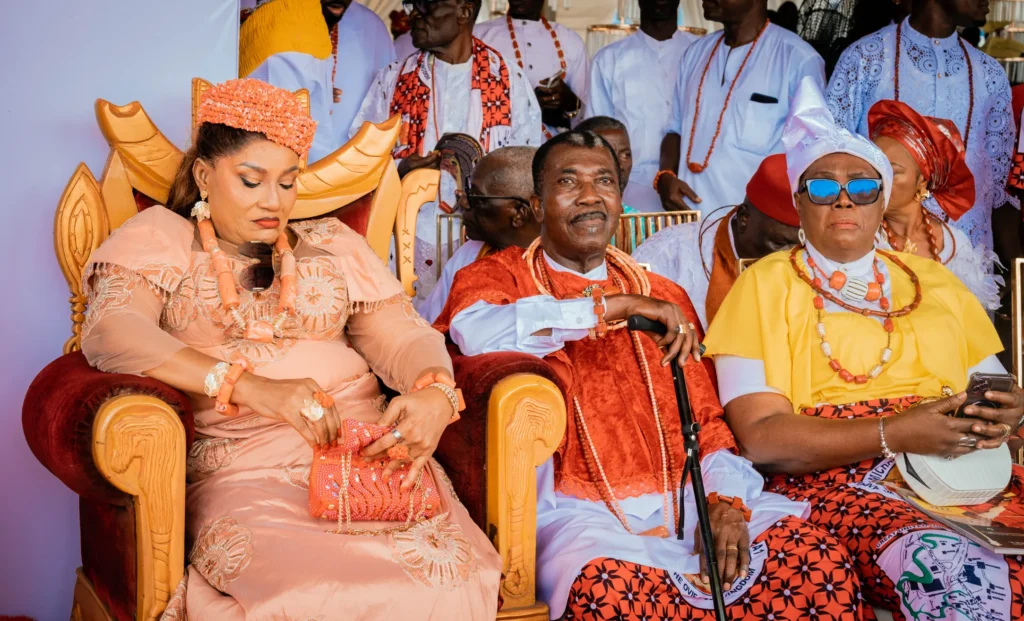
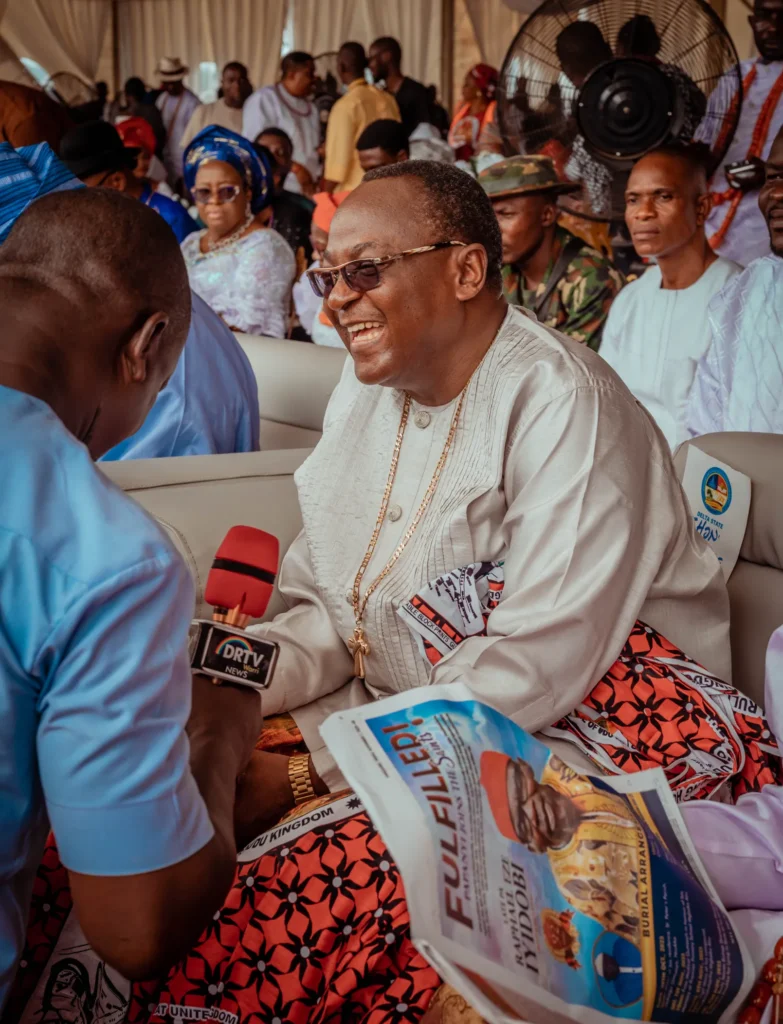
The occasion drew some of the most prominent figures in Delta State public life. Among those present were former Governor H.E. James Ibori and Hon. (Rev.) Francis Ejiroghene Waive, the member representing Udu in the Federal House of Representatives. The Deputy Governor, H.E. Sir Monday Onyeme, led the state’s delegation and performed the presentation.
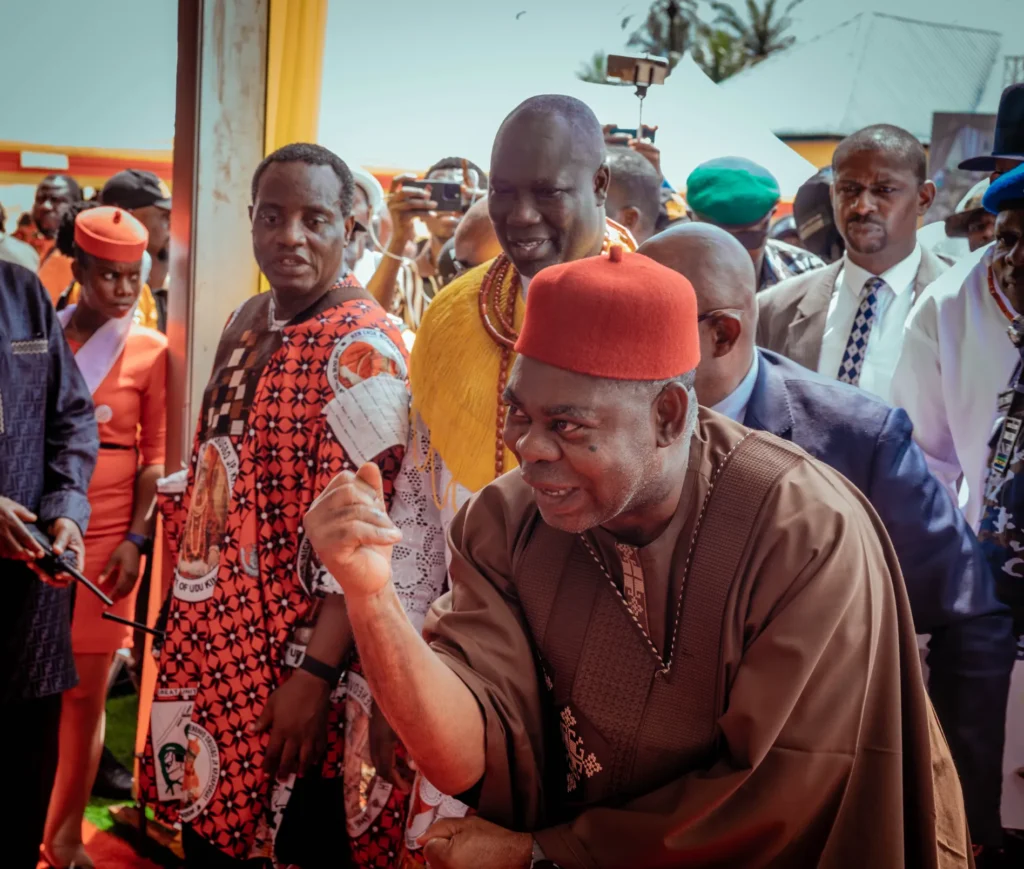
Fellow Ovies from across Delta State were also present. Their attendance is an important mark of brotherhood among the state’s traditional institutions. In the culture of the region, the presence of other monarchs at a ceremony is an act of recognition, and it shows that Udu’s Ovie takes his place among peers.
The presence of political leaders from both the state and federal levels shows the regard in which the kingdom is held. It also reflects the working relationship between traditional institutions and government, a partnership that has shaped development in the region for generations.

The Ovie and His Throne Name
His Royal Majesty bears the full name Engr. Michael Ogheneovo Orugbo, JP, KP. On ascending the throne, he took the name Okporua I, the name by which he is known to his people and to the wider traditional system of Delta State. The name begins a new chapter in the long line of Udu’s rulers and ties his reign to those who came before him.
His titles reflect a life of service in both professional and public life. As an engineer, a Justice of the Peace and a holder of the KP honour, he brings to the throne a record of working with people and institutions, and he now brings it to the leadership of the kingdom.
Why the Ceremony Matters to Udu
For ordinary people in Udu, the ceremony is more than a matter of protocol. A traditional ruler with a Staff of Office has an authority that is recognised across the state’s institutions. That recognition affects how the palace works with government, how disputes are resolved and how the kingdom is represented beyond its borders.
It also matters to the diaspora. Many sons and daughters of Udu live in Lagos, Abuja and abroad, and for them the Ovie remains a living link to home. The presentation of the staff assures them that the throne they look to is established and recognised in law.
A Kingdom Moves Forward
With the formalities complete, attention turns to the work ahead. A traditional institution thrives when it serves its people, so the strength of a reign is measured by how well the Ovie protects peace, preserves culture and speaks for the community in the rooms where decisions are made.
The people of Udu have good reason to be hopeful. The kingdom’s traditions are well established, its council of chiefs is active, and its throne now holds the full recognition of custom and law. These are strong foundations for a reign that aims to serve its people and honour its heritage.
Conclusion
The presentation of the Staff of Office to Okporua I on 7 November 2025 is a landmark in the modern history of Udu Kingdom. Held in the presence of former Governor James Ibori, the Deputy Governor of Delta State, the representative of Udu in the House of Representatives and fellow Ovies from across the state, the ceremony affirmed that the reign of Okporua I stands complete in custom and in law.
Udu has shown again that tradition and modern governance can work side by side. As the Ovie takes up his responsibilities, the kingdom looks to a reign grounded in its past and committed to the wellbeing of its people.